






A hospital is not a standard building that operates as a single, unified entity
Operating rooms, patient wards, pharmacies, laboratories, and logistics areas have different requirements for access permissions, operating hours, and alarm response protocols. When procuring building automation equipment, if control boundaries are not first defined by zone, operations and maintenance personnel will likely encounter issues with unclear permissions and conflicting policies later on.
Purchasers can first break down the concept that “a hospital is not a standard building with uniform operations” into three layers: equipment, interfaces, and services. At the equipment level, examine product installation requirements; at the interface level, review point tables, feedback mechanisms, and error descriptions; and at the service level, assess whether the supplier can keep pace with on-site adjustments.
In smart hospitals, building controllers, I/O modules, environmental sensors, dry contact modules, smart lighting, and energy metering interfaces are often installed and maintained by different teams.If the naming, addressing, tagging, and spare parts rules corresponding to the principle that “a hospital is not a standard building with a unified operational structure” are not clearly defined in the early stages, system maintenance will become burdensome later on, even if individual devices function properly.
Controllers must support local policies and clear grouping
Controllers, lighting modules, and environmental sensors should be organized by zone rather than simply lumped together in a single system. The clearer the zoning, the easier subsequent maintenance, spare part replacement, and handover of access rights will be.
The requirement that “controllers support local policies and clear grouping” should be clarified during the smart hospital quotation phase, rather than relying on on-site coordination after installation is complete. Suppliers should at least provide typical wiring diagrams, examples of protocol point representations, sample testing recommendations, and instructions for replacement models.
If zone adjustments, equipment replacements, or platform integration changes arise later, the pre-organized documentation regarding “controllers must support local policies and clear grouping” will allow the engineering team to quickly trace the cause. Without this documentation, time will be wasted tracing wires, verifying addresses, and reinterpreting status meanings.
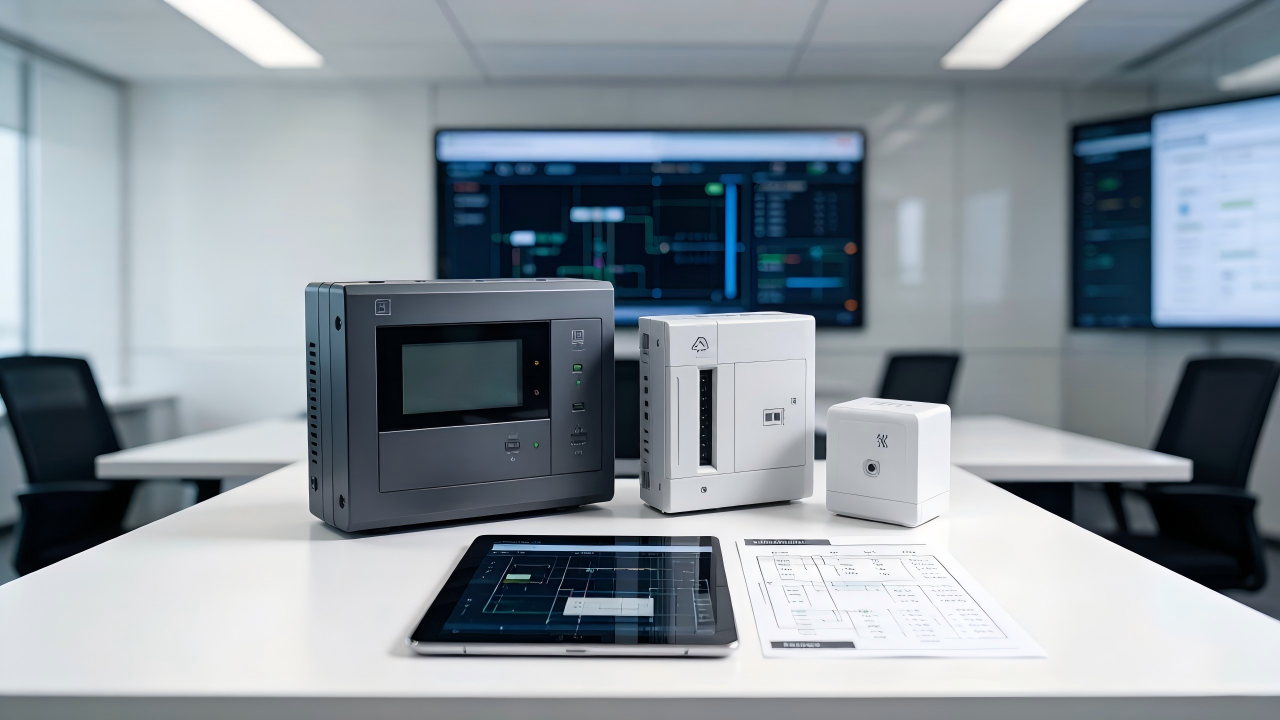
Supplier Documentation Must Support Operations Handover
In addition to product specifications, suppliers should be required to provide recommendations for zone naming, point grouping methods, wiring diagrams, and device labeling rules. These materials directly impact the hospital’s ability to maintain stable operations in the long term.
For overseas clients, whether the supplier understands the smart hospital environment is more important than simply answering “whether there is stock.” The purchasing party should focus on how the equipment involved in “supplier documentation must support the handover to operations and maintenance” connects to the system, how it reports status, and how it recovers after an anomaly.
Including this information in advance in technical clarifications or contract appendices transforms the requirement that “supplier documentation must support the handover of operations and maintenance” from a general statement into a verifiable clause during acceptance. This also makes it easier for the procurement team to distinguish between suppliers engaged in standard trade transactions and those capable of supporting project delivery.
Confirm Zone Permissions After Sample Testing
- Ask suppliers to provide on-site implementation assumptions for zone permissions, such as installation locations, cable lengths, power supply methods, communication distances, and commissioning responsibilities.
- Sample testing should cover normal operation, fault recovery, equipment replacement, and batch address configuration related to zone permissions—do not limit testing to whether a single device functions.
- The purchasing party may require the supplier to submit sample point-of-control tables, terminal block definitions, lists of installation accessories, and post-sales replacement policies.
- For proprietary control products, verify protocol compatibility and data feedback; for other low-voltage supporting products, verify materials, specifications, certifications, packaging, shipping loss rates, and on-site spare part ratios.
- The value of bundled procurement lies in reducing coordination costs, but this is contingent upon having clear acceptance criteria for each product category—rather than relying solely on the supplier’s verbal assurance that “everything will be provided.”
- Since “hospitals are not standard buildings with uniform operations” and are significantly influenced by on-site conditions, it is advisable to conduct a small-scale pilot first, then formalize the pilot results into bulk procurement rules.
Clarify zone access permissions during the quotation phase
When managing zoning permissions, CtrlWorks is best suited to participate in the early project stages to confirm product combinations, interface documentation, spare parts, and customization requirements. In addition to proprietary control products, cables, terminals, power supplies, enclosures, mounting hardware, and other low-voltage auxiliary materials can also be evaluated together, reducing on-site clarification costs after procurement.